Elephant and Lion Statue
Combination and sense of scene: Elephant and lion statues may be presented in the form of collocation (such as juxtaposition, interaction or forming a specific scene). The base design may be simple or with decorative lines. The overall atmosphere tends to be solemn, majestic or natural theme, which is suitable for virtual construction requirements such as garden landscape, interior decoration and cultural scene.
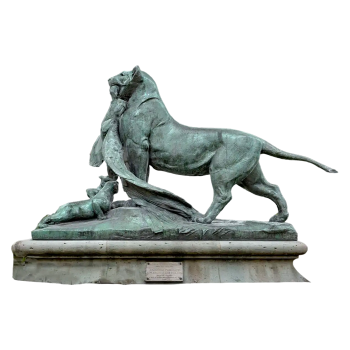
French Cultural Heritage Tigers and Cubs
The Tiger and the Cub was created by August Nicholas Kane (Auguste Nicolas Cain), a representative of the 19th century French animal sculpture school. The statue was originally located in the Tuileri Garden in Paris. Due to lawn protection regulations (no trampling on the grass), one side of the statue was moved from 30 meters outside the park boundary.
France Paris Tuileri Garden statue rhino attacked by tiger
This is a famous sculpture created by French sculptor Auguste Cain (Auguste Cain). The work was created in 1884 and has been displayed in the Tuileri Garden in Paris. Auguste Cagin (Auguste) is a famous French sculptor of the Animaliers school who created many portraits of wild and domesticated animals in the 19th century.
Japan 18th Century Statue Lion Dog Statue
This Japanese stone lion was made in the 18th century. The concept of stone lion originated in Chinese Buddhism and became popular there. This pair of lions is usually one male and one female, the male lion carries a ball, and the female lion is with the young lion, which is believed to protect the building from harmful spiritual influences and potential threats. It later spread to other parts of Asia, including Japan and several other countries.
Nepal Siti Lakshmi Temple Statue Mara Dynasty Horse Statue
The sculpture is located on the stairs of the Sidhi Laxmi Temple (Sidhi Laxmi Temple) in Bader Gangduba Square, Kathmandu, Nepal. It was built by King Jagat Prakash Malla between the 1660 s and the 1670 s. In addition to this sculpture, there are 10 sculptures on both sides of the staircase, including humans, animals (such as horses, dogs, rhinos) and various mythical creatures.
Nepal Cultural Heritage Patanduba Square Elephant Statue
Patanduba Square is located in the Kathmandu Valley of Nepal. It is an important historical attraction listed as a world cultural heritage by UNESCO. The square is famous for its unique traditional architecture and stone carvings, and this elephant statue adds a cultural depth. As part of Nepal's long history, elephants have played multiple roles in transport, warfare, ritual and symbolism. The engraving of the "Om" symbol gives the statue a deeper spiritual meaning.
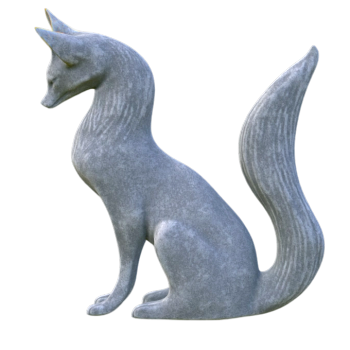
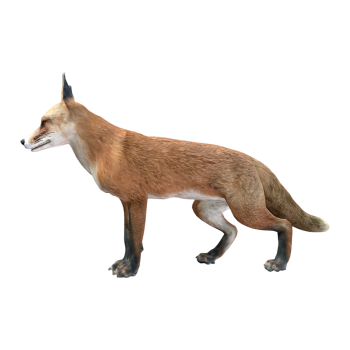
Japanese Cultural Heritage Fox Statue
In Japanese folklore, a fox (the original word for "fox" in Japanese means fox) is an intelligent creature with supernatural abilities. Originally, the fox was the messenger of the great god Ina. The great god Inagawa is a Japanese Shinto god responsible for the fox, abundance, rice, tea, wine, agriculture and industry, as well as general prosperity and worldly success.
Eighteenth-century pottery sculpture "The Declining Macaw"
The Sliding Macaw, produced by John Joachim Candler at Mason in May 1732. Porcelain, no coloring. The sculpture shows a macaw hanging upside down from a tree trunk, vividly recreating the bird's natural form. The work is currently in the porcelain collection of the National Art Collection (Staatliche Kunstsammlungen Dresden) in Dresden.
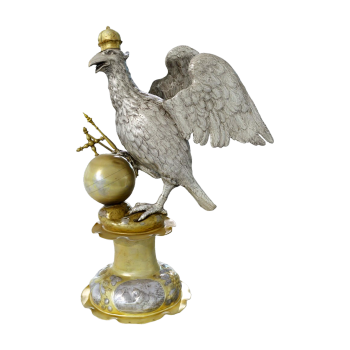
Polish Eagle Ware
This vessel is displayed in the National Art Collection at Wawel Royal Castle. Designed in the shape of a Polish eagle, it showcases Poland's national symbol and artistic style. Wawel Royal Castle is one of the most important historical and cultural sites in Poland, with a large collection of precious works of art and historical artifacts.
Bronze statue of "Wild Boar"
This "wild boar" statue is a plaster model of an ancient statue in the collection of the Museum of the Academy of Fine Arts in Krakow. It is a replica of an ancient statue in the Uffizi Gallery in Florence. This marble boar statue is from the Roman period and is a copy of a lost Hellenistic original, probably by artists from around the famous sculptor Lisipos (Lysippos). This Roman boar statue was presented by Pope Pius IV to Cosimo I de Medici, Duke of Tuscany.
Lion border stone carving-MichalOl
It is a concrete sculpture created by sculptor MichalOl in 2009 and officially unveiled on November 6, 2009. The sculpture symbolizes the border of Bohemia and Moravia, although it does not lie on the actual border in history. The sculpture is located in Žíárnad Sázavou, Czech Republic, near the Pilze Reservoir, and has become an important local landmark. It is not only a work of art, but also a profound reflection on Czech history and culture, reflecting the historical connection and cultural integration of the two regions.
Ram statue-Antonín Nový
It was created by the Czech artist Antonín Nový and is located on Kulska Street in the district of Starý Lískovec in the city of Brno. Is a multi-talented sculptor, specializing in metal and glass sculpture creation. The works are not only widely praised in the Czech Republic, but also have a certain influence in the world. They have been exhibited in Italy, Poland, the Netherlands and Germany. Completed in 1983, this sculpture is a striking and iconic work of art in the region. His works are famous for their exquisite craftsmanship and profound artistic expression. His works cover many fields such as sculpture, practical art and garden architecture.
Rhino-JaroslavRóna
JaroslavRóna is a multi-talented Czech artist whose identities include sculptor, painter, actor, educator and writer. It is known for its sculptural works, which cover a wide range from public art to private collections. The artistic style is deeply influenced by primitive art and expressionism, and has created many striking sculptures and paintings. His works are famous for their strong visual impact and profound emotional expression. His sculptures often take the characters as the theme, and convey strong emotions and profound social comments through exaggeration and deformation.
Charles Francois Jacques' work "Crocodile and Snake Fight - Belgium"
It is a famous artwork, also known as the 'Belgian Struggle', created by Belgian artist Charles Fran ç ois Jean Baptiste Rave in 1848 as a sculpture. It depicts a fierce battle between a huge crocodile and a snake in the water. Their bodies intertwine to form a dynamic and dramatic picture. The crocodile opened its huge mouth, trying to bite the snake, while the snake tangled around the crocodile, trying to survive. It is also a part of Belgian cultural heritage.
Popular Models
Shrine
115 View
King Kong Hercules Wood Carving
166 View
The bell tower of a Japanese temple
189 View
Japanese Samurai Helmet
117 View
Random Model
Bar Cart
177 View
Ceiling lamp
129 View
Tapestry Vortex Shell
101 View
Antonia Trovelsi Monument
166 View
Marshall DSL15C Guitar Speaker
109 View